



Potent Planets Cosmic Pre-Rolls
Product Overview
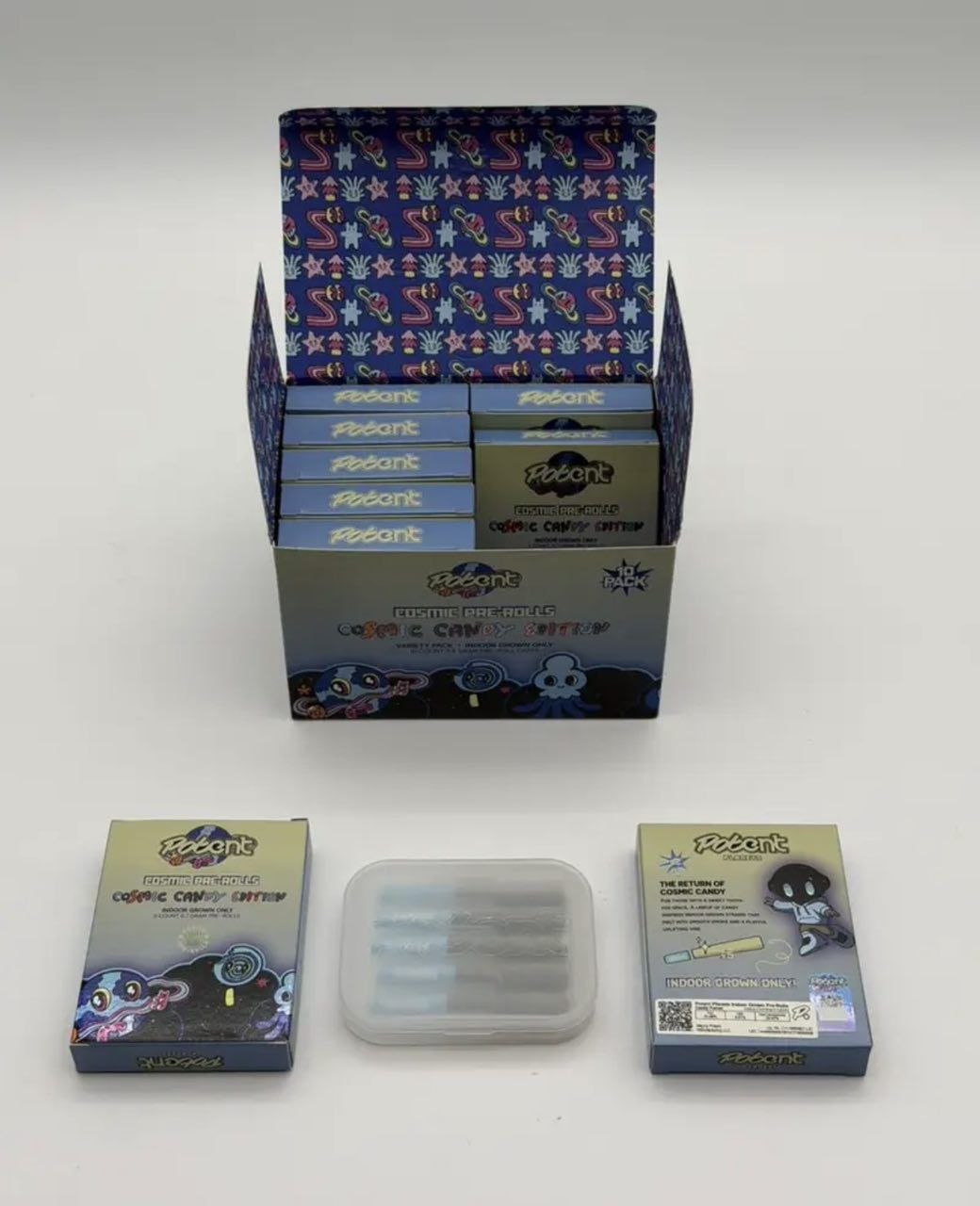
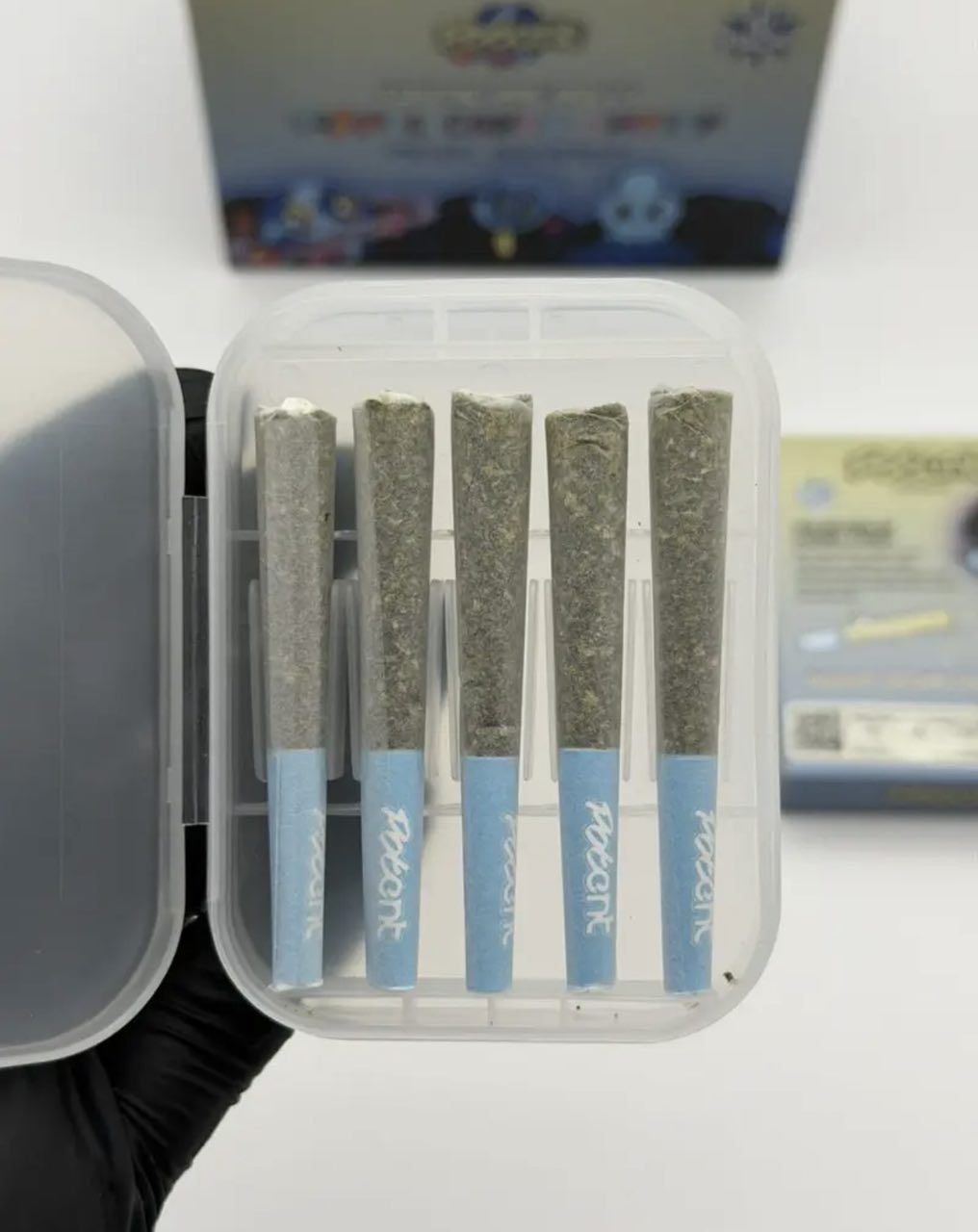
Potent Planets Cosmic Pre-Rolls are presented as pre-rolled cannabis products designed in a ready-to-use format. The product appears in online listings under the Potent Planets name, with packaging and quantity options that may vary according to the seller and market. Because product specifications can differ between batches and jurisdictions, the physical packaging and applicable laboratory documentation should be treated as the primary sources for exact product information. {“fallbackMarkdown”:”(PUSHIN PACKS619)”,”reference”:{“matched_text”:””,”prefix”:null,”start_idx”:927,”end_idx”:946,”safe_urls”:[“https://pushinpacks619.com/product/potent-planets-cosmic-pre-rolls/”,”https://pushinpacks619.com/product/potent-planets-cosmic-pre-rolls/?utm_source=chatgpt.com”],”refs”:[],”alt”:”(PUSHIN PACKS619)”,”prompt_text”:null,”type”:”grouped_webpages”,”fallback_items”:null,”error”:null,”style”:null,”items”:[{“title”:”buy potent planets cosmic pre-rolls best online- packs #1″,”url”:”https://pushinpacks619.com/product/potent-planets-cosmic-pre-rolls/?utm_source=chatgpt.com”,”attribution”:”PUSHIN PACKS619″,”pub_date”:null,”snippet”:””,”attribution_segments”:null,”supporting_websites”:[],”refs”:[{“turn_index”:0,”ref_type”:”search”,”ref_index”:0}],”hue”:null,”attributions”:null}],”status”:”done”},”showLoginRequiredCard”:false}
A pre-roll generally consists of prepared cannabis material placed inside rolling paper or a similar approved material. This format eliminates the need for consumers to prepare loose flower themselves. However, the exact contents of a particular pre-roll depend on the manufacturer, product edition, production batch, and applicable regulations.
For that reason, a responsible product description should distinguish between general information about pre-rolls and specifications that have been confirmed for the individual Potent Planets Cosmic Pre-Roll.
Product Format
The pre-roll format provides a standardized way of packaging cannabis flower. Cannabis material is prepared and placed into a paper-based form, after which the finished product is packaged for distribution.
The preparation process can involve several stages. First, cannabis material may be selected and processed. Next, an appropriate quantity may be measured and transferred into the rolling material. Finally, the finished pre-roll can be inspected and packaged according to the manufacturer’s procedures.
Depending on the product, additional components may be included. However, ingredients should not be assumed without checking the package.
Product Identification
Product identification is an important part of an accurate listing. The product name should correspond with the name printed on the physical package.
For Potent Planets Cosmic Pre-Rolls, the product page can identify the brand, product name, edition, quantity, and other verified information. If a specific strain, cultivar, flavor, or formulation is printed on the package, that information can be incorporated into the listing.
At the same time, details from unrelated Potent Planets products should not automatically be transferred to the Cosmic Pre-Rolls. Products within the same brand can have different compositions and specifications.
Quantity Information
Available online listings show different quantity options for Potent Planets Cosmic Pre-Rolls, including mixed-flavor package sizes.
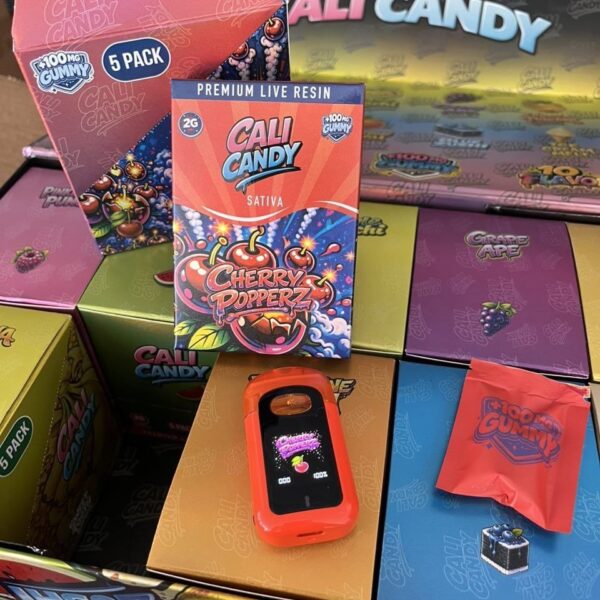
The Cali Candy 2G Disposable is a product presented in a compact, pre-filled disposable vaping format. The “2G” designation indicates an advertised two-gram capacity, while the exact formulation, cannabinoid concentration, flavor, hardware configuration, and production details should be confirmed from the packaging and applicable product documentation.
A detailed product description should provide useful information without assuming that every product carrying a similar name has identical specifications. Online listings can contain outdated information, and different product editions may be distributed with different hardware or formulations. Therefore, the individual package should remain the primary reference for product-specific information.
The following information is intended to provide a structured description suitable for product documentation, cataloging, or an informational product page.
Product Identity
The product name is an important part of product identification. A listing should reproduce the name exactly as it appears on the manufacturer’s packaging whenever possible.
For this product, the identifying name is Cali Candy 2G Disposable. The 2G designation distinguishes the product by its advertised capacity, while the Cali Candy name identifies the product or product family.
If an additional edition, flavor, strain designation, or batch identifier appears on the package, that information should be added to the product record. Doing so can help distinguish the unit from other products that use similar branding.
Product names should remain consistent across inventory systems, websites, invoices, and internal records. Consistency reduces confusion and makes it easier to locate the correct product.
Understanding Product Capacity
The advertised two-gram capacity is one of the most straightforward specifications associated with this product.
However, capacity should not be confused with potency. The amount of material contained in a device and the concentration of cannabinoids within that material represent different measurements.
A two-gram device may therefore contain a formulation with a different cannabinoid concentration from another two-gram device. Likewise, two products with the same concentration can have different total quantities.
The expected operating duration also cannot be established from capacity alone. Individual usage patterns vary, while device design and formulation can influence consumption.
Consequently, a responsible listing should identify the advertised capacity without guaranteeing a specific number of inhalations, sessions, or days of use.
Disposable Product Format
A disposable vaping product is generally designed as an integrated unit. The reservoir and electronic components are housed within the same device.
This design differs from a conventional system in which a cartridge or tank is attached to a separate battery. With an integrated product, fewer components need to be assembled or maintained.
Nevertheless, the internal components should not be modified. Users should not attempt to open the housing, alter the heating system, or refill the reservoir unless the manufacturer specifically states that the product is designed for such procedures.
A disposable should also be handled carefully throughout storage, transportation, and use.
Product Construction
The external housing provides protection for the internal components and typically contains the reservoir, heating system, battery, and airflow pathway.
The exact construction of the Cali Candy 2G Disposable should be confirmed from manufacturer documentation. Features found on one disposable model should not automatically be attributed to another.
For example, different devices can use different heating elements, airflow arrangements, activation systems, or battery configurations.
Therefore, technical specifications should be included only when they have been verified for the exact model being documented.
Mouthpiece
The mouthpiece is the portion of the device through which vapor is inhaled. Its design can vary between disposable models.
The mouthpiece should remain protected during storage and transportation. Packaging can help prevent unnecessary exposure to dust, moisture, and physical contamination.
If the mouthpiece is visibly damaged or the device has been compromised, it should not be modified or repaired by the consumer. Instead, the product should be handled according to the manufacturer’s or retailer’s instructions.
Airflow
Airflow is another hardware characteristic that can vary between products.
Some disposable devices incorporate fixed airflow, while others may use different internal airflow arrangements. Because the exact system used by the Cali Candy 2G Disposable has not been independently established here, a product listing should avoid assigning a specific airflow feature without supporting documentation.
Descriptions should also avoid promising a particular draw resistance or vapor output unless those characteristics have been documented.
Activation System
Disposable devices may use different activation methods. Some activate automatically when a user draws through the mouthpiece, while others may incorporate a button or another control mechanism.
The activation method for the specific Cali Candy 2G Disposable should be confirmed from the packaging or manufacturer’s instructions.
This detail can be useful in a product listing because it explains how the device operates. However, it should not be inferred from another model or from generic disposable-device specifications.
Battery Information
Electronic disposable products can contain integrated batteries. The exact battery type, capacity, and configuration should be verified before those details are published.
Battery-related information is particularly important because incorrect charging instructions can create unnecessary safety risks.
If the product is not designed to be recharged, users should not attempt to connect it to a charger. If the product is rechargeable, only the manufacturer’s specified charging procedure should be followed.
The device should also be protected from extreme heat, crushing, puncturing, or other physical damage.
Charging Capability
Charging capability should be treated as a product-specific specification.
Some disposable products are manufactured for a single-use lifecycle, while other devices include rechargeable batteries. Online descriptions may not consistently distinguish between these designs.
Therefore, the Cali Candy 2G Disposable should be described as rechargeable only when the exact product packaging or manufacturer documentation confirms that feature.
If a charging port is present, the manufacturer’s instructions should identify the appropriate charging method. Unauthorized chargers, modifications, or adapters should not be recommended.
Formulation
The formulation of the product should be identified using reliable product documentation.
Cannabis disposable products can contain different types of extracts and formulations. Terms such as distillate, live resin, rosin, diamonds, terpene blends, or other extract descriptions should not be assigned to the Cali Candy 2G Disposable unless the relevant documentation confirms them.
This is important because product terminology can vary among sellers. A description copied from another website may refer to a different product, batch, or edition.
For an accurate product page, formulation information should therefore be obtained from the physical label, manufacturer documentation, or applicable batch-specific certificate of analysis.
Cannabinoid Information
Cannabinoid content is a separate specification from product capacity.
If the package provides THC, THCA, CBD, or other cannabinoid information, those values can be incorporated into the product listing exactly as documented.
However, cannabinoid percentages should not be estimated from the product name. Similarly, the term “2G” should not be interpreted as a cannabinoid quantity.
Where laboratory testing is available, the certificate of analysis may provide additional information about cannabinoid concentrations. The report should correspond to the applicable batch.
Terpene Information
Some cannabis products include terpene information as part of their formulation description.
If the Cali Candy 2G Disposable packaging identifies specific terpenes, those details may be listed. However, a product name that contains a flavor-oriented term does not automatically establish a particular terpene composition.
Terpene claims should therefore be based on manufacturer documentation rather than assumptions.
This distinction is useful because consumers may interpret a flavor name as a specific chemical composition when the name may simply represent branding.
Flavor Information
The exact flavor should be confirmed from the product packaging.
The term “Cali Candy” may be part of the product’s branding, but it should not by itself be used to establish specific tasting notes.
If the manufacturer identifies a flavor, the product page can reproduce that designation. A more detailed description can then be added if reliable documentation supports it.
Retailers should avoid inventing flavor characteristics. For example, descriptions involving specific fruits, sweetness levels, cooling sensations, or aromatic notes should not be stated as product facts unless they are supported by the relevant product information.
Product Variants
Product variants can be identified by flavor, edition, formulation, or packaging.
If multiple Cali Candy 2G variants are offered, each should have a separate product record where appropriate. This makes inventory management easier and helps prevent customers from receiving a different variant than the one selected.
Product photographs should also correspond to the specific variant.
A generic image may be useful for a broad product category, but it should not be presented as an exact representation of a variant when the packaging or design differs.
Packaging
Packaging protects the product during transportation and provides important identification information.
The package may contain the product name, net quantity, formulation, batch number, warnings, manufacturer or distributor information, and other required labeling.
Retailers should compare the online product description with the physical package before publishing the listing.
If the package contains a verification code, that system should be used according to the manufacturer’s instructions.
Label Accuracy
Accurate labeling is particularly important for regulated products.
A product page should not contradict the physical packaging. If the package identifies one formulation and the online listing identifies another, the discrepancy should be investigated before the product is offered.
Similarly, numerical values should be copied carefully. Small errors in cannabinoid percentages, quantities, or batch information can make an otherwise professional listing misleading.
Batch Numbers
Batch numbers can provide traceability.
A retailer can record the batch number when receiving inventory and associate it with supplier documentation. If laboratory testing is available, the certificate can then be connected to the corresponding inventory.
This approach is useful when multiple production batches are stocked simultaneously.
Batch information can also assist with product inquiries. If a consumer or regulator requests information about a particular unit, the retailer may be able to identify the relevant production documentation more quickly.
Certificate of Analysis
A certificate of analysis, when available, can provide laboratory information about a particular batch.
Depending on the jurisdiction and testing laboratory, a report may contain cannabinoid measurements and results for various contaminants.
However, the document should be interpreted within its stated scope. A report applies to the material and batch that it identifies. It should not automatically be presented as evidence that every product under the same brand has identical characteristics.
For that reason, product listings should avoid broad laboratory claims unless they are properly supported.
Authenticity
Authenticity can be important when branded products are sold through multiple distribution channels.
Retailers should source products from legitimate suppliers and retain documentation where appropriate. Packaging, batch numbers, verification systems, and supplier records can all contribute to product identification.
A product that appears substantially different from documented packaging should be investigated before it is listed as genuine.
Similarly, retailers should avoid making absolute authenticity claims without supporting evidence.
Storage Requirements
Storage conditions can affect the condition of a disposable device.
The product should be stored according to manufacturer instructions and protected from excessive heat, direct sunlight, moisture, and physical damage.
A secure storage area should be used to prevent unauthorized access. The product should also be kept away from children and pets.
Retailers can establish storage procedures that separate different batches and variants. This can improve inventory organization while preserving traceability.
potent planets cosmic pre-rolls potent planets cosmic pre-rolls potent planets cosmic pre-rolls potent planets cosmic pre-rolls potent planets cosmic pre-rolls potent planets cosmic pre-rolls potent planets cosmic pre-rolls potent planets cosmic pre-rolls potent planets cosmic pre-rolls potent planets cosmic pre-rolls potent planets cosmic pre-rolls potent planets cosmic pre-rolls potent planets cosmic pre-rolls potent planets cosmic pre-rolls potent planets cosmic pre-rolls potent planets cosmic pre-rolls potent planets cosmic pre-rolls
Transportation
Transportation should minimize unnecessary physical impact and environmental exposure.
Products should be protected from crushing, puncturing, extreme temperatures, and moisture. Original packaging can provide an additional layer of protection.
Where regulated products are involved, transportation requirements should also be checked against applicable local laws.
A product listing should not imply that the product can be transported without restriction across jurisdictions.
Damaged Products
A damaged device should not be treated as normal inventory.
Signs of damage may include cracks, deformation, leakage, unusual heating, or other changes to the physical structure.
If damage is identified, the product should be separated from undamaged stock. The retailer or manufacturer can then be contacted for instructions.
Consumers should not attempt to repair internal electronic components themselves.
Responsible Handling
The product should be handled according to the manufacturer’s instructions.
Disposable devices should not be opened, punctured, crushed, or intentionally modified. Such actions can compromise the device and create additional hazards.
The product should also remain in its original packaging when practical during storage and transportation.
Product Disposal
A disposable device should be disposed of responsibly after its useful lifecycle has ended.
Because electronic devices may contain batteries and other components, they should not automatically be treated as ordinary household waste. Applicable local disposal or recycling guidance should be followed.
Retailers can provide general information directing customers toward appropriate local disposal resources where such guidance is available.
Legal Considerations
Cannabis products are subject to regulations that vary by jurisdiction.
Rules may apply to age verification, product packaging, advertising, labeling, possession, transportation, distribution, and consumption.
Therefore, retailers should verify the requirements applicable to their intended market before publishing or selling the product.
A product being listed online does not establish that it is legal to sell or possess everywhere.
Advertising Considerations
Product descriptions should distinguish factual information from promotional claims.
Statements about medical benefits, guaranteed effects, superior potency, or safety should not be included without appropriate authorization and supporting evidence.
Similarly, comparative claims should be supported by reliable information.
A factual description can remain useful without relying on exaggerated language. Capacity, packaging information, verified formulation, batch details, and documented hardware specifications provide a stronger foundation.
Consumer Information
Consumers should review the complete product packaging before using the device.
The package may contain information that is not reproduced online, including warnings, ingredients, cannabinoid concentrations, storage instructions, batch numbers, and manufacturer information.
Consumers should follow applicable age restrictions and local laws.
Where cannabis products are regulated, additional rules may apply to transportation, public consumption, and operating vehicles or machinery. potent planets cosmic pre-rolls potent planets cosmic pre-rolls potent planets cosmic pre-rolls potent planets cosmic pre-rolls potent planets cosmic pre-rolls potent planets cosmic pre-rolls potent planets cosmic pre-rolls potent planets cosmic pre-rolls
Retailer Verification Process
A retailer can use a simple verification process before publishing the product.
First, the product name should be checked against the packaging.
Next, the advertised 2G capacity should be confirmed.
The edition or flavor should then be identified.
Afterward, formulation and cannabinoid information can be compared with the label or laboratory documentation.
Hardware specifications should also be verified separately.
Finally, applicable warnings and legal requirements should be reviewed before publication.
This sequence reduces the chance that an unsupported specification will appear on the product page.
Recommended Product-Page Structure
A professional product page can begin with a concise overview.
The specification section can then provide the essential information in an easy-to-scan format.
Additional sections can explain formulation, variant information, packaging, storage, and documentation.
Frequently asked questions can be included at the end for readers who need quick answers.
This structure improves readability because technical details are separated into manageable sections.
Suggested Specification Table
Specification Information
Product name Cali Candy 2G Disposable
Product format Disposable vaping device
Advertised capacity 2 grams
Formulation Confirm from packaging
Cannabinoid profile Confirm from packaging or applicable laboratory report
Flavor/variant Confirm from individual package
Battery Confirm exact model specifications
Charging Confirm from manufacturer documentation
Batch number Printed on applicable packaging
Laboratory testing Verify batch-specific documentation
Storage Follow manufacturer instructions
Legal status Depends on jurisdiction
Product Selection and Identification
When several disposable products are offered together, clear identification becomes increasingly important.
The Cali Candy 2G Disposable should be separated from other products by its exact name and variant. If an additional flavor or edition is available, that designation should be displayed prominently.
Product images should match the corresponding variant, while specifications should be tied to the same product record.
This system reduces confusion during ordering, packing, and inventory management.
Product Information Updates
Product pages should be reviewed periodically.
Manufacturers can change packaging, formulations, hardware, or labeling. Consequently, information that was correct when a listing was first created may eventually become outdated.
Retailers can reduce this risk by checking new inventory against existing product pages.
Whenever a new batch introduces a material specification change, the listing should be updated accordingly.
Customer Service Information
Clear product documentation can also assist customer service teams.
When customers ask about formulation, capacity, hardware, or batch information, support staff can refer to the verified product record.
If a question cannot be answered from the available documentation, the customer should be directed toward the manufacturer or appropriate product documentation rather than receiving an unsupported answer.
This approach maintains consistency between the website and customer support channels.
Quality-Control Considerations
Quality control involves more than checking the appearance of a product.
Retailers can inspect packaging, verify product identifiers, record batch information, and maintain supplier documentation.
Where laboratory certificates are supplied, they can be checked for matching product and batch information.
These procedures create a more reliable chain of information from supplier to retailer to customer.
Information Transparency
Transparency is particularly useful when online specifications vary.
Instead of selecting whichever specification appears most favorable, a retailer can identify what has been verified and omit details that remain uncertain.
For example, if the exact charging system is not documented, the product page can simply omit that specification.
This practice is preferable to publishing an assumption that may later prove incorrect.
Product Description Style
A readable product description should use straightforward language.
Short paragraphs make technical information easier to process. Headings allow readers to locate specific topics quickly, while bullet points are useful for specifications.
Transition words such as “however,” “therefore,” “additionally,” “consequently,” and “similarly” can improve connections between ideas when they are used naturally.
At the same time, excessive repetition should be avoided. Each section should provide information that contributes something new to the overall product record.
Frequently Asked Questions
What is the advertised capacity?
The product is identified as a 2G disposable, indicating an advertised two-gram capacity.
Does 2G indicate cannabinoid potency?
No. Capacity and potency are separate measurements.
What formulation does the product use?
The exact formulation should be confirmed from the individual package or applicable product documentation.
Is a particular flavor guaranteed?
The flavor or variant should be identified from the package. The product name alone should not be treated as proof of a particular flavor profile.
Is the device rechargeable?
potent planets cosmic pre-rolls potent planets cosmic pre-rolls potent planets cosmic pre-rolls potent planets cosmic pre-rolls potent planets cosmic pre-rolls potent planets cosmic pre-rolls potent planets cosmic pre-rolls potent planets cosmic pre-rolls potent planets cosmic pre-rolls
Charging capability should be confirmed for the exact model. It should not be inferred from another disposable product.
How should it be stored?
The manufacturer’s storage instructions should be followed. The device should generally be protected from excessive heat, moisture, direct sunlight, physical damage, children, and pets.
What if the device appears damaged?
It should not be used or modified. The retailer or manufacturer should be contacted for appropriate instructions.
Where should cannabinoid information come from?
The product label and matching batch-specific laboratory documentation are preferred sources.
Final Product Summary
The Cali Candy 2G Disposable is presented as a compact, pre-filled disposable vaping product with an advertised two-gram capacity. Its capacity provides a basic product identifier, but it does not independently establish potency, duration, performance, or cannabinoid concentration.
Exact formulation, flavor, hardware, battery, charging capability, and laboratory information should be confirmed for the particular unit or production batch.
For retailers, accurate documentation should form the foundation of the product listing. Product names, quantities, variants, batch numbers, and verified specifications should correspond with the physical inventory.
For consumers, the product packaging remains an important source of information. Labels and applicable laboratory documentation can provide details that may not appear in an online description.
Storage and handling instructions should also be followed carefully. Applicable age restrictions and local regulations should be observed, particularly because cannabis and vaping products can be subject to specific legal requirements.
Ultimately, the most dependable description is one that separates verified facts from assumptions. A clear presentation of capacity, product format, packaging information, documentation, storage guidance, and regulatory considerations provides useful information while avoiding unsupported claims about potency, effects, safety, or performance.



Reviews
There are no reviews yet.