

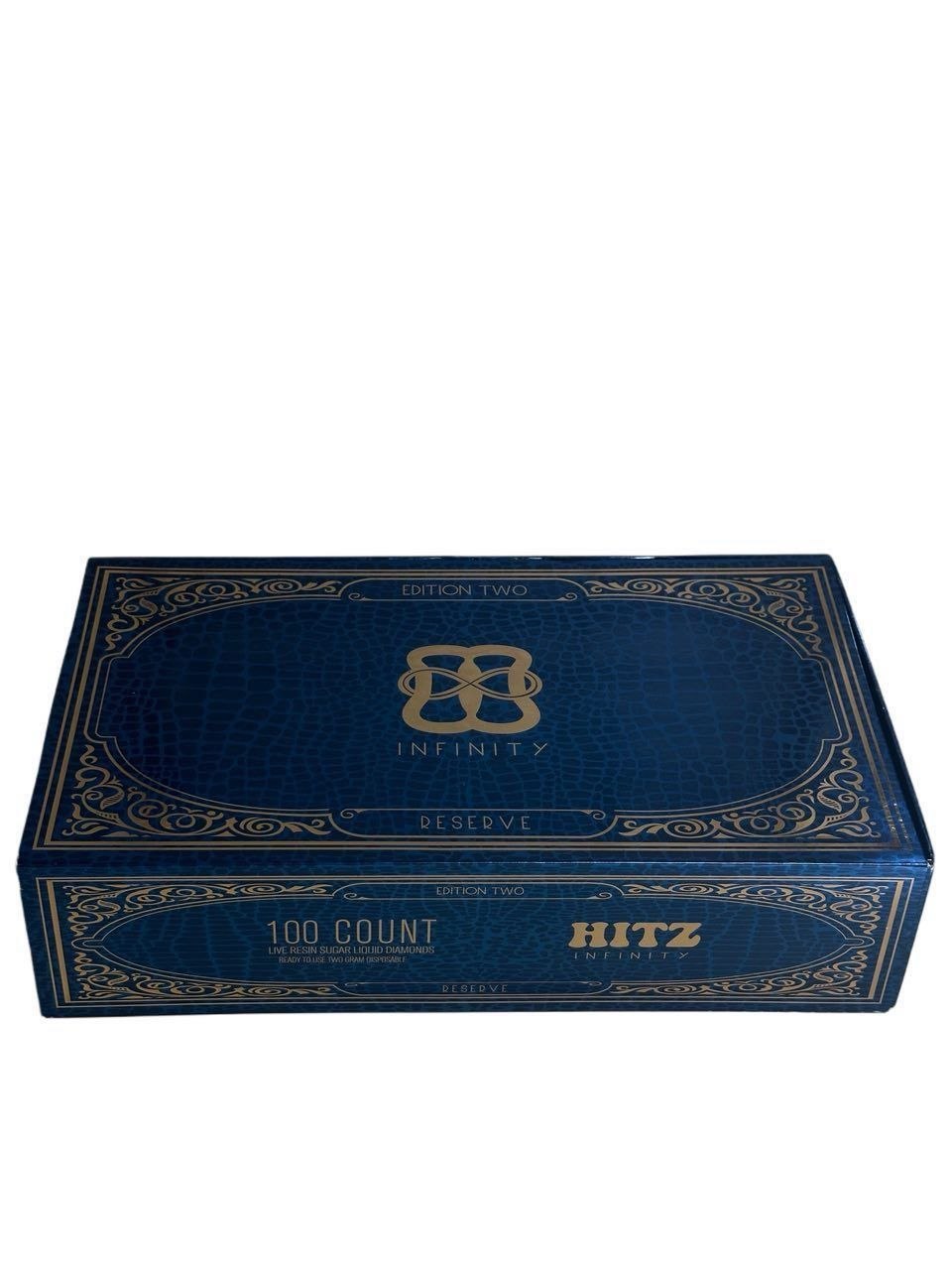

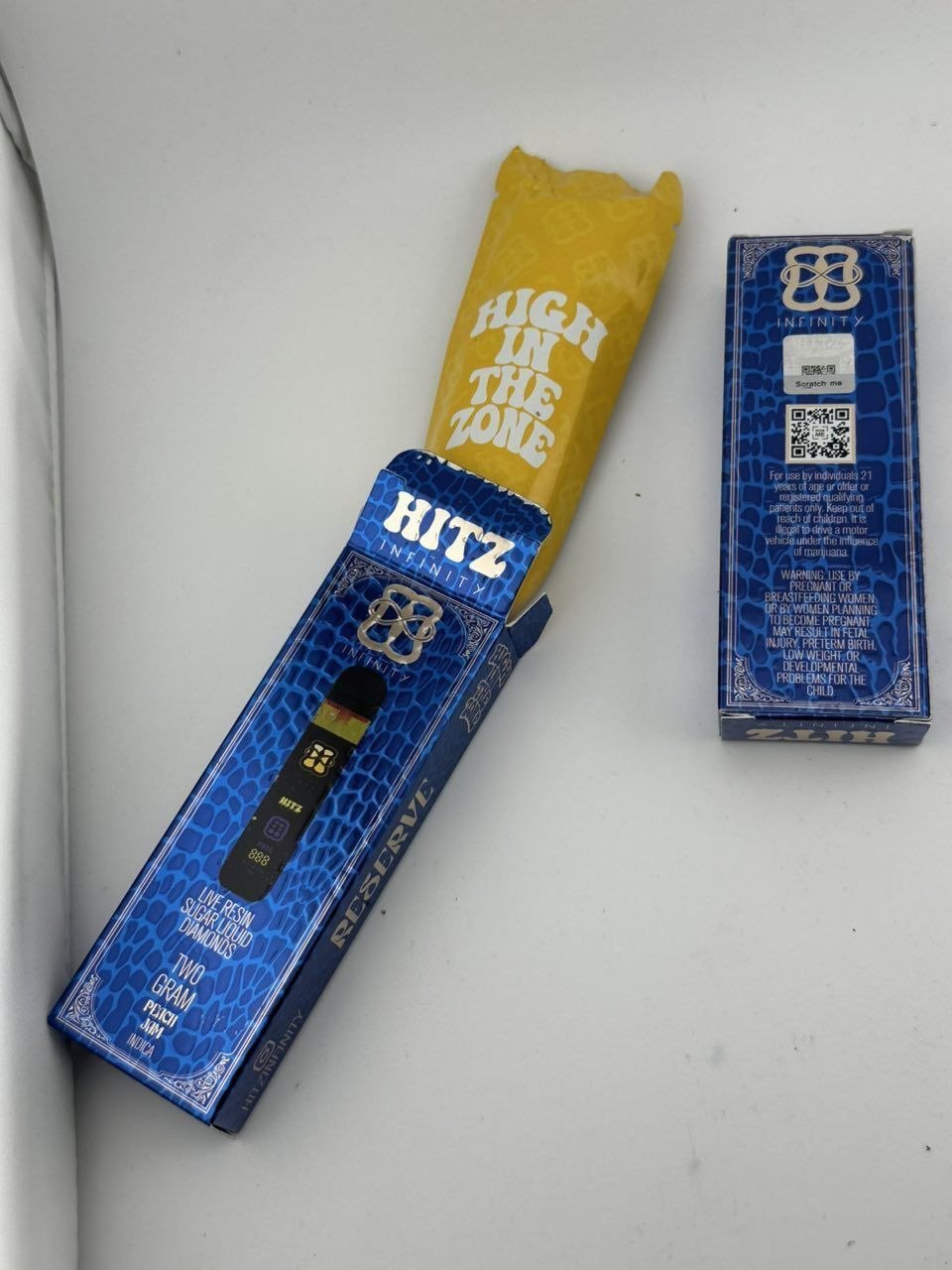


Hitz 2G Disposable Blue Edition
Product Overview
The hitz 2g disposable blue edition is a disposable vaping product identified by its “2G” capacity designation and Blue Edition name. The product belongs to a category of self-contained vaping devices in which the primary components are incorporated into a single unit.
The “2G” designation generally refers to a stated quantity of approximately two grams of vape material. However, this figure should not be interpreted as a measurement of potency, battery capacity, or expected effects. Those characteristics depend on the actual formulation and hardware specifications of the particular product.
Because product specifications can vary between batches, editions, and markets, the information printed on the physical packaging should be treated as the primary reference. In addition, manufacturer documentation or applicable laboratory records can provide further information about formulation and testing.
Product Identification
Accurate identification is important when documenting the Hitz 2G Disposable Blue Edition. The complete product name should be recorded as it appears on the packaging, including any variant, edition, flavor, formulation, or batch designation.
The term “Blue Edition” may distinguish this product from other Hitz versions. However, the name alone does not establish the contents or chemical profile of the device. Those characteristics should be confirmed through product labeling and reliable documentation.
For a detailed product record, useful identification information can include the product name, stated net quantity, manufacturer or distributor, batch number, formulation, ingredient information, laboratory information, and applicable warnings.
Meaning of the 2G Designation
The “2G” designation generally indicates a stated two-gram quantity of vape material. Nevertheless, net quantity and potency are separate measurements.
For example, two products can contain the same stated quantity while having different concentrations of active compounds. Therefore, a product description should not use the 2G designation as evidence that the product is particularly strong or produces a specific experience.
The net quantity printed on the package should take priority over assumptions based solely on the product name. If laboratory documentation is available, it can provide additional information about the contents of the specific batch.
Disposable Format
A disposable vaping device typically combines its main components within one housing. These components may include a reservoir, heating element, battery, airflow pathway, and mouthpiece.
Because these parts are integrated, the product generally does not require a separate cartridge and battery assembly. However, the exact construction of the Hitz 2G Disposable Blue Edition should be confirmed through manufacturer documentation.
The device should not be opened or deliberately modified. Disassembly can expose internal electrical components and may damage the battery, reservoir, or heating system.
Formulation
The exact formulation of the Hitz 2G Disposable Blue Edition should be established from its label, manufacturer information, or relevant laboratory documentation.
Depending on the particular product, formulation information may include cannabinoid concentrations, terpene information, ingredients, or other composition details. However, these characteristics should not be inferred from the product name.
A responsible product description should report only information that can be verified. If a precise cannabinoid percentage or ingredient list is unavailable, it should not be invented.
In addition, laboratory documentation should correspond with the product’s batch or lot number whenever possible. This helps establish that the reported analysis relates to the actual product being described.
Hardware Information
The precise hardware specifications of the Blue Edition should be verified before publication. Potential specifications may include battery type, battery capacity, charging capability, activation method, reservoir design, airflow configuration, and heating technology.
Not every disposable product uses the same hardware. Some devices are activated by inhalation, while others incorporate a button. Likewise, some products are designed to operate without recharging, while others may contain rechargeable batteries.
Consequently, a product listing should not claim that the Hitz 2G Disposable Blue Edition is rechargeable, draw-activated, button-activated, or equipped with a particular heating system unless the relevant specification has been confirmed.
Packaging and Labeling
Packaging is an important source of product information. It may identify the product, quantity, formulation, manufacturer, batch number, warnings, storage instructions, and other information required by local regulations.
The packaging should be checked carefully before a product description is published. In particular, the stated quantity and formulation should correspond with the product being documented.
Moreover, discrepancies between the device and its packaging should not be ignored. If the product name, quantity, batch number, or other identifying information differs substantially, additional verification may be appropriate.
Original packaging should also be retained when it contains instructions, warnings, laboratory information, or authentication details.
Laboratory Documentation
Where laboratory testing is available, the associated documentation can provide more detailed information than a general product description.
A certificate of analysis may identify the tested sample, batch number, testing date, cannabinoid concentrations, and specific contaminant screens. However, the report should be examined carefully to determine whether it actually corresponds with the product being described.
A laboratory report should not automatically be treated as proof that every unit of a product has identical characteristics. Formulations and manufacturing processes can change, and testing may apply to a particular batch.
Therefore, batch-specific documentation is generally more informative than an unrelated report bearing the same brand name.
Authenticity
Authenticity can be an important consideration when purchasing or documenting branded vaping products.
Consumers should examine the packaging for consistent branding, product identification, batch information, manufacturer details, and applicable authentication features. If the manufacturer provides a verification system, the information should be checked through an appropriate source.
However, a QR code or authentication label should not automatically be considered conclusive proof of authenticity. The information returned by the verification system should correspond with the actual product and, where applicable, its batch.
Similarly, online photographs can assist with identification but should not be treated as definitive evidence.
Storage
Storage instructions supplied by the manufacturer should be followed.
Generally, electronic vaping products should be protected from excessive heat, direct sunlight, moisture, crushing, and other physical damage. The device should also be kept away from children and pets.
Battery-powered products require particular care. Extreme temperatures and physical damage can affect battery performance and may create safety concerns.
If a device becomes unusually hot, swollen, damaged, or otherwise abnormal, it should not be treated as a normal functioning product. Manufacturer guidance or appropriate local safety guidance should be consulted.
Handling
The device should remain intact during normal handling. Consumers should not attempt to open the casing, remove the battery, extract the contents, or modify the heating system.
Furthermore, the mouthpiece should be protected from contamination and physical damage. If the device leaks or its casing becomes damaged, it should be handled according to the manufacturer’s instructions.
Unauthorized repairs should be avoided because the internal components may not be designed for consumer servicing.
Safety Information
Vaping products are not risk-free. A neutral product description should therefore avoid describing the Hitz 2G Disposable Blue Edition as harmless, completely safe, or free from health risks.
Similarly, unsupported medical claims should not be associated with the product. A vaping product should not be presented as a treatment, cure, prevention method, or substitute for medical care unless such claims are supported by appropriate evidence and are legally permitted.
Age restrictions and other legal requirements may also apply depending on the jurisdiction.
Consumers should read the warnings supplied with the product and follow applicable instructions. Questions involving individual health conditions, medications, or potential interactions should be directed to an appropriate healthcare professional.
Storage and Transportation
Transportation can affect the condition of a disposable vaping device. Excessive heat, pressure, moisture, or physical impact can damage the casing or internal components.
For that reason, the product should be transported according to manufacturer recommendations and applicable regulations.
The original packaging can provide useful protection during transportation. It may also contain information that is needed for identification or safe handling.
If damage occurs during transportation, the product should be inspected before it is handled further. A damaged battery or leaking device should not be opened or repaired without appropriate expertise.
End-of-Life Disposal
A disposable vaping product can contain electronic components and a battery. Therefore, it may require a disposal method different from ordinary household waste.
Local battery-recycling or electronic-waste programs may provide appropriate collection options. However, disposal requirements differ between jurisdictions, so local waste-management guidance should be followed.
The device should not be burned, punctured, crushed, or deliberately dismantled. Such actions can damage internal components and create avoidable hazards.
Once the product has reached the end of its usable life, it should be handled through an appropriate local disposal or recycling channel.
Regulatory Information
Vaping products can be regulated differently across countries, states, provinces, and municipalities.
Regulations may address product formulation, testing, packaging, labeling, advertising, taxation, distribution, minimum purchase age, possession, and disposal.
Consequently, a general product description should not claim that the Hitz 2G Disposable Blue Edition is legal everywhere. Any statement about legality or regulatory compliance should be tied to a specific jurisdiction and supported by current information.
Regulatory requirements can also change over time. Therefore, commercial product listings should be reviewed periodically.
Responsible Product Description
A useful product description should separate verified specifications from assumptions.
For example, the stated 2G capacity can be reported if it appears on the packaging. By contrast, claims about potency, battery life, duration, performance, or effects should not be presented as established facts unless appropriate evidence supports them.
This distinction improves readability and accuracy. It also helps readers understand which characteristics are documented and which require additional verification.
Furthermore, concise headings make technical information easier to navigate. Readers can quickly locate sections covering quantity, formulation, packaging, safety, storage, and disposal.
Frequently Asked Questions
What is the Hitz 2G Disposable Blue Edition?
It is a disposable vaping product identified by the Hitz name, a stated 2G capacity, and the Blue Edition designation. Exact specifications should be verified from the product’s packaging and manufacturer documentation.
What does 2G mean?
The 2G designation generally refers to approximately two grams of stated vape material. It does not independently indicate potency or expected effects.
Does Blue Edition identify a specific formulation?
The name may distinguish one product version from another, but the designation alone does not establish the chemical composition. Formulation information should be obtained from the label or appropriate documentation.
Is the device rechargeable?
That feature should be confirmed for the specific unit. Disposable devices can differ in their battery configurations, so charging capability should not be assumed.
Can the device be refilled?
Consumers should not assume that a disposable device is refillable. Unless the manufacturer specifically identifies the product as refillable, the housing should not be opened or modified.
How should the product be stored?
Manufacturer instructions should be followed. The device should generally be protected from excessive heat, moisture, direct sunlight, physical damage, children, and pets.
How should the device be discarded?
Because disposable vaping products can contain batteries and electronic components, local battery or electronic-waste disposal guidance should be followed.
hitz 2g disposable blue edition hitz 2g disposable blue edition hitz 2g disposable blue edition hitz 2g disposable blue edition hitz 2g disposable blue edition hitz 2g disposable blue edition hitz 2g disposable blue edition hitz 2g disposable blue edition hitz 2g disposable blue edition hitz 2g disposable blue edition hitz 2g disposable blue edition hitz 2g disposable blue edition hitz 2g disposable blue edition hitz 2g disposable blue edition hitz 2g disposable blue edition hitz 2g disposable blue edition.
Key Product Information
| Category | Information |
|---|---|
| Product name | Hitz 2G Disposable Blue Edition |
| Product type | Disposable vaping device |
| Stated capacity | 2G |
| Formulation | Verify from product packaging |
| Cannabinoid profile | Verify from applicable documentation |
| Hardware | Verify for the specific model |
| Charging capability | Verify from the actual device |
| Batch information | Refer to product packaging |
| Laboratory information | Verify against the relevant batch |
| Disposal | Follow local battery/electronic-waste guidance |
The Hitz 2G Disposable Blue Edition can be documented as a disposable vaping product with a stated two-gram designation. However, the product name alone does not establish its exact formulation, potency, hardware configuration, charging capability, or laboratory status.
For an accurate product record, the physical packaging should be treated as a primary source of identification. Manufacturer documentation and applicable laboratory records can then provide additional information where available.
Additional Information About Product Specifications
When documenting the Hitz 2G Disposable Blue Edition, accuracy should take priority over assumptions. Product names can identify a particular edition, but they do not necessarily provide complete technical information. Therefore, specifications should be taken from the product itself, its packaging, and reliable manufacturer documentation whenever possible.
The stated 2G capacity is one of the most visible characteristics associated with the product. However, capacity should be distinguished from concentration, potency, and total cannabinoid content. These measurements describe different aspects of a product and should not be used interchangeably.
For example, a two-gram device can contain a formulation with a different cannabinoid concentration from another two-gram device. Consequently, the 2G designation should be treated primarily as a quantity specification rather than a description of strength.
Product Variant Identification
The Blue Edition designation may be used to distinguish this product from other versions within the Hitz product range. Nevertheless, the exact significance of an edition name should be confirmed through the manufacturer’s labeling.
Product variants can differ in formulation, packaging, flavor designation, hardware, or other characteristics. As a result, information from one version should not automatically be transferred to another.
When preparing a catalog or product database, each variant should be assigned its own record when the manufacturer provides distinct identification information. This makes updates easier and reduces confusion between products with similar names.
A useful product record can include the exact product name, variant designation, stated quantity, batch number, formulation, manufacturer, packaging information, and applicable warnings.
Importance of Batch Information
Batch or lot numbers can help connect a physical product with its manufacturing and testing records. When laboratory documentation is available, the batch number should be compared with the identifier shown on the product or packaging.
This process provides a stronger basis for describing the contents of a particular unit. Furthermore, batch information can help identify differences between manufacturing periods.
If a product listing provides laboratory results without identifying the relevant batch, the results should not automatically be treated as representative of every unit. Testing can be performed on specific samples, and formulations can change over time.
Therefore, batch-specific information is particularly useful when a precise product description is required.
Packaging Inspection
Packaging can provide several layers of information. In addition to the product name and stated quantity, it may contain manufacturer details, warnings, ingredient information, regulatory markings, storage instructions, and identification codes.
The package should be examined before product information is published. Any discrepancy between the package and the device should be investigated.
For instance, differences in product name, quantity, batch number, or formulation may indicate that information from two separate products has been combined accidentally. Such errors can make an otherwise well-written product description unreliable.
Moreover, packaging information can change when a manufacturer updates its design or labeling. Therefore, older product photographs should not automatically be used as evidence of current specifications.
Hardware Documentation
Technical information about the device should be confirmed separately from information about its contents.
Hardware specifications can include battery type, charging method, activation mechanism, heating system, reservoir capacity, airflow configuration, and physical dimensions. However, these specifications are model-dependent.
A general description should therefore avoid stating that the Hitz 2G Disposable Blue Edition uses a particular coil, battery capacity, or activation system unless the information has been verified.
This distinction is useful because disposable products can look similar while using different internal designs.
Battery Considerations
A disposable vaping device can contain a battery even though the product is not designed for long-term reuse. The battery should therefore be treated as an electrical component rather than as ordinary packaging.
Physical damage, excessive heat, puncturing, or unauthorized modification can create safety concerns. Consequently, the device should not be opened to access the battery.
If the product has a charging feature, the manufacturer’s instructions should be followed. If charging is not supported, an external charging method should not be improvised.
Any device that becomes unusually hot, swollen, damaged, or otherwise abnormal should be handled cautiously and according to appropriate safety guidance.
Product Condition and Quality Control
A product description should distinguish between the product’s advertised specifications and its physical condition.
For example, a sealed device may be described differently from one whose packaging has been opened or damaged. Similarly, visible leakage, cracks, missing components, or damaged labeling can affect the reliability of a product record.
Quality-control information can also be useful when supplied by the manufacturer. Such information may include batch testing, manufacturing dates, packaging controls, or authentication systems.
However, quality claims should not be created simply because a product appears well packaged. Claims about manufacturing standards should be supported by appropriate documentation.
Information About Formulation
Formulation information should be presented carefully. If the product contains cannabinoids, the relevant cannabinoid profile should be taken from the package or appropriate laboratory documentation.
The product name, edition name, or variant name should not be used as a substitute for laboratory data.
Similarly, descriptive names should not automatically be interpreted as evidence of a particular chemical composition. Different manufacturers can use similar terminology for products with different formulations.
Where a certificate of analysis is available, the report can provide a more precise source of information. Nevertheless, the report should correspond to the product’s batch.
Clear Consumer Communication
A strong informational description should be easy to understand. Technical terms can be used when necessary, but they should be explained clearly.
For example, “net quantity” describes the stated amount of product material, while “potency” refers to the concentration of a particular active compound. These terms are related but not interchangeable.
Likewise, “disposable” describes the intended product lifecycle, whereas “rechargeable” describes a battery feature. A product can have characteristics that make those terms relevant in different ways, so the specific model should be verified.
Using precise terminology reduces confusion and improves the quality of the product record.
Storage and Environmental Conditions
Storage conditions can influence the physical condition of vaping products. Excessive heat, prolonged sunlight, moisture, and physical pressure should generally be avoided unless the manufacturer provides different instructions.
The original package can be useful because it may contain storage recommendations. Those instructions should be retained and followed.
The product should also be stored in a location that is inaccessible to children and pets. In addition, it should be protected from situations where it could be crushed or exposed to high temperatures.
If the product shows signs of damage during storage, it should not be opened or repaired without appropriate guidance.
Transportation
Transportation introduces additional considerations because the device can be exposed to movement, pressure, temperature changes, or impact.
hitz 2g disposable blue edition hitz 2g disposable blue edition hitz 2g disposable blue edition hitz 2g disposable blue edition hitz 2g disposable blue edition hitz 2g disposable blue edition hitz 2g disposable blue edition hitz 2g disposable blue edition hitz 2g disposable blue edition hitz 2g disposable blue edition hitz 2g disposable blue edition hitz 2g disposable blue edition hitz 2g disposable blue edition hitz 2g disposable blue edition hitz 2g disposable blue edition hitz 2g disposable blue edition.
The product should be transported in accordance with manufacturer instructions and applicable laws. If the packaging provides specific transportation warnings, those instructions should be followed.
Furthermore, damaged packaging should be inspected before the product is handled. A device with visible battery damage or leakage should not be treated as an ordinary intact product.
End-of-Life Management
Eventually, a disposable device reaches the end of its intended product lifecycle. At that stage, appropriate disposal becomes important because the device can contain a battery and electronic components.
Local recycling centers, battery collection programs, and electronic-waste facilities may provide suitable disposal options. However, the correct method varies according to local rules.
The device should not be burned, punctured, crushed, or dismantled. Instead, it should be transferred through an appropriate disposal channel.
This approach reduces unnecessary risks and helps ensure that electronic components are handled appropriately.
Regulatory Review
Regulatory requirements should be considered whenever the product is listed commercially.
Different jurisdictions can impose different rules covering product composition, testing, packaging, labeling, minimum age, advertising, distribution, and taxation. Therefore, a description prepared for one market may not automatically be suitable for another.
A product listing should not claim regulatory approval or universal legality unless those statements have been verified for the relevant jurisdiction.
Furthermore, regulatory requirements can change. Product information should therefore be reviewed periodically rather than treated as permanently current.
Avoiding Unsupported Claims
The quality of a product description is affected by the accuracy of its claims.
Statements about quantity can generally be supported through labeling. However, claims about performance, duration, strength, safety, or effects require additional evidence.
Terms such as “best,” “strongest,” “safest,” or “long-lasting” are particularly problematic when they cannot be demonstrated objectively. They can also shift an otherwise informational description toward promotional language.
A neutral description should instead focus on measurable and documented characteristics.
Recommended Information Hierarchy
For a clear product page, information can be arranged in a logical order.
First, identify the product and its stated quantity. Next, describe the device category and verified formulation information. Afterward, provide packaging and laboratory information.
The final sections can address storage, handling, safety, regulatory considerations, and disposal.
This structure helps readers locate the information they need without searching through long paragraphs. It also separates technical specifications from safety guidance.
Final Considerations
The Hitz 2G Disposable Blue Edition should be described according to the characteristics that can actually be verified. The 2G designation provides a stated quantity, while the Blue Edition name identifies a particular product version. Neither designation, by itself, establishes potency, formulation, hardware specifications, or safety characteristics.
Consequently, the physical packaging, manufacturer documentation, and relevant batch-specific laboratory information should be consulted before final publication.
A careful product description should also recognize that specifications may change between versions or manufacturing periods. For that reason, older product information should be reviewed before it is reused.





Reviews
There are no reviews yet.