

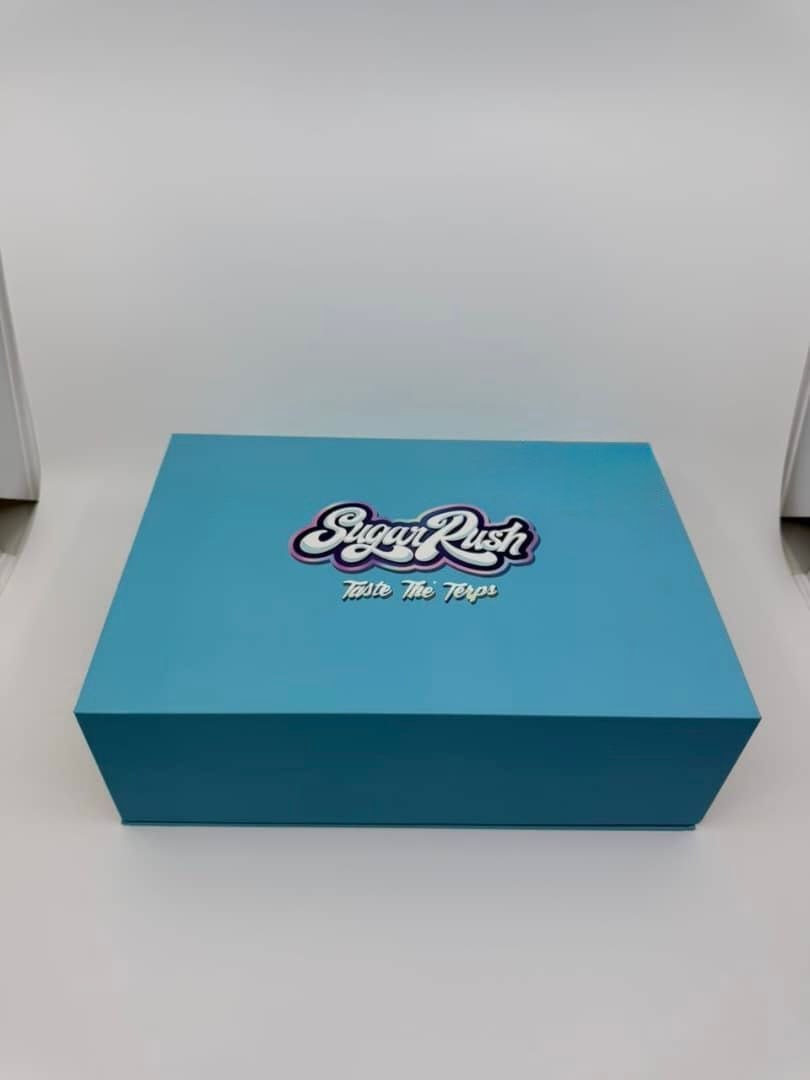
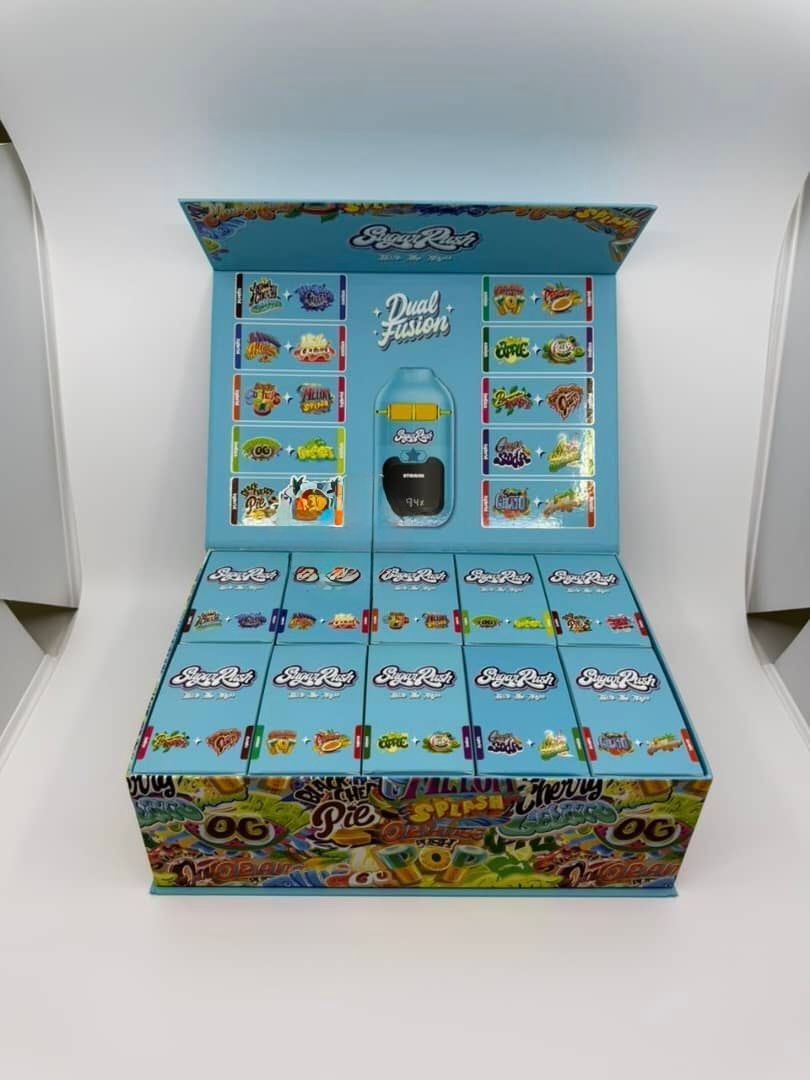


Sugar Rush 2G Disposable
Product Overview
sugar rush 2g disposable is a disposable vaporizer product identified by the “Sugar Rush” product name and a stated 2-gram capacity. Because products using this name may be produced by different manufacturers, the exact formulation, cannabinoid concentration, ingredients, hardware specifications, and flavor profile should be confirmed from the packaging and applicable laboratory documentation.
The “2G” designation generally refers to the stated quantity of oil or formulation contained in the device. It should not automatically be interpreted as a measurement of cannabinoid content. The actual cannabinoid concentration depends on the specific formulation and should be obtained from the product label or certificate of analysis.
The disposable format indicates that the device is intended to function as a self-contained unit rather than as a reusable battery-and-cartridge system. Specific hardware features, however, can differ between manufacturers. A particular device may have different battery specifications, airflow characteristics, activation mechanisms, or charging arrangements.
Product Identification
The product can be cataloged under the name Sugar Rush 2G Disposable.
The name alone does not establish a particular cannabinoid profile or formulation. Similar names may be used across different product lines, so the manufacturer should be identified before technical specifications are assigned.
A complete product record may include the following information:
- Product name
- Manufacturer or brand
- Stated capacity
- Cannabinoid composition
- Ingredient list
- Flavor or formulation description
- Batch or lot number
- Laboratory testing information
- Packaging date
- Device specifications
- Applicable warnings and legal information
Where any of these details are unavailable, they should be identified as unverified rather than estimated.
The 2-Gram Capacity
The “2G” designation is an important part of the product’s identification. It indicates a stated two-gram quantity associated with the formulation inside the disposable device.
However, capacity and potency are separate measurements. A two-gram device does not necessarily contain a specific amount of THC, CBD, or another cannabinoid. Those concentrations must be determined from the formulation and the relevant laboratory results.
The stated capacity can also be affected by how a manufacturer defines its product quantity. Therefore, the package label should remain the primary source for the exact net contents.
From a cataloging perspective, the 2-gram designation provides a useful distinction from smaller disposable products. Nevertheless, it should not be used to infer performance, duration, potency, or effects.
Disposable Design
A disposable vaporizer generally combines its formulation reservoir, heating component, and power source within one device. This design can reduce the number of separate components associated with a reusable vaporizer system.
The exact construction of the Sugar Rush device depends on the manufacturer. Some disposable devices are activated by inhalation, while others may incorporate a button or another control mechanism. Some models may include charging functionality, whereas others are designed to be discarded once the available formulation or battery is depleted.
These features should be confirmed from the specific packaging.
The exterior may contain branding, product identification, capacity information, warnings, and batch details. The physical design can vary in shape, color, and materials, so those characteristics should not be attributed to the product without direct evidence.
Formulation
The formulation inside a disposable device is one of its most important specifications. Without the manufacturer’s label or laboratory report, the precise contents of a Sugar Rush 2G Disposable cannot responsibly be identified.
Cannabis-derived formulations may contain cannabinoids and naturally occurring or added aromatic compounds, depending on the product. Hemp-derived and other formulations can also differ significantly.
For that reason, ingredient claims should be based on the current package information.
A laboratory certificate may provide information about cannabinoids such as THC, THCA, CBD, CBDA, CBG, or other compounds. The exact substances tested depend on the laboratory and regulatory requirements.
If the product is intended for a regulated market, testing documentation may also address contaminants and other safety parameters.
Flavor Identification
The name “Sugar Rush” may suggest a sweet or dessert-oriented flavor concept, but the name itself should not be treated as confirmation of a specific flavor formulation.
Manufacturers can use creative names for products without those names corresponding to standardized flavor categories. Therefore, a product description should identify a flavor only when it has been confirmed by the packaging or producer.
If the label identifies a particular flavor, that description can be reproduced accurately without adding unsupported tasting notes.
Likewise, terms such as “sweet,” “candy,” “fruit,” or “dessert” should not be presented as confirmed characteristics unless they appear in reliable product information.
This distinction is particularly important for disposable products because formulation details can vary between batches and manufacturers.
Cannabinoid Information
Cannabinoid content should always be treated as batch-specific information.
A product identified as a 2-gram disposable does not inherently have a particular THC or CBD percentage. The cannabinoid concentration must be obtained from the current product label or certificate of analysis.
A laboratory report may provide separate values for major cannabinoids and, depending on the testing program, minor cannabinoids as well.
Those results can be useful when creating a factual product record because they distinguish measurable chemical information from subjective descriptions.
It is also important to distinguish between a cannabinoid’s concentration and the total quantity of the formulation. Two products can have the same stated capacity while containing different cannabinoid concentrations.
Accordingly, the 2-gram specification should be listed separately from laboratory potency results.
Laboratory Testing
Laboratory documentation provides information that cannot be determined reliably through appearance or product naming.
A certificate of analysis may identify the tested batch, laboratory, testing date, cannabinoid concentrations, and other analytical results. Depending on the jurisdiction and product category, additional testing may cover pesticides, heavy metals, residual solvents, microbial contamination, or other regulated substances.
The relevant certificate should correspond to the product’s batch or lot number whenever possible.
If a laboratory result cannot be verified, the product description should not supply an estimated result. Doing so could create an inaccurate representation of the product.
For a professional product catalog, laboratory information can therefore be recorded as a separate technical section rather than mixed with subjective descriptions.
Device Construction
Disposable vaporizers generally contain several functional components. These can include a reservoir, heating element, battery, mouthpiece, airflow path, and exterior housing.
The exact arrangement varies by device.
The reservoir holds the formulation. The heating component is responsible for converting the formulation into an inhalable aerosol when the device is activated. The battery provides the energy required by the heating system.
The mouthpiece provides the point through which the aerosol exits the device. Airflow components regulate the movement of air through the system.
These descriptions are general characteristics of disposable vaporizer construction and should not be interpreted as confirmation that every component is configured identically in a particular Sugar Rush device.
The manufacturer’s technical information should be consulted for exact hardware specifications.
Packaging
Packaging serves several functions. It identifies the product, communicates required information, and helps protect the device during transportation and storage.
The package may contain the product name, stated quantity, manufacturer information, batch number, laboratory information, warnings, ingredient details, and applicable regulatory notices.
The exact labeling requirements depend on the market in which the product is sold.
Packaging should therefore be considered part of the product information rather than merely an exterior presentation. For a product description, details printed on the current package should take precedence over information from unrelated listings.
If packaging information conflicts with a third-party description, the manufacturer’s current label and applicable laboratory documentation should be reviewed.
Batch Variation
Formulations and hardware can change between production runs.
A manufacturer may update a formulation, change a supplier, modify packaging, or introduce a revised device while retaining a similar product name. Consequently, information from an older batch should not automatically be applied to a newer one.
Batch numbers provide an important method of distinguishing one production run from another.
Where available, the batch number should be recorded alongside laboratory information. This practice can help establish which test results correspond to a particular product.
Variation can also occur in naturally derived formulations. Differences in source material, processing, storage, and manufacturing conditions may influence the final composition.
Therefore, a product description should distinguish permanent product-identification information from batch-specific information.
Storage
The product should be stored according to the manufacturer’s instructions and applicable legal requirements.
Environmental conditions can affect both the formulation and the physical device. Excessive heat may affect the contents or hardware, while prolonged exposure to unsuitable conditions can alter the product’s physical characteristics.
The device should also be kept in its original packaging when appropriate and stored securely away from children and unauthorized users.
Storage instructions supplied by the manufacturer should take precedence over generic recommendations because different devices and formulations can have different requirements.
General Safety Information
Disposable vaporizer products containing cannabinoids may produce psychoactive effects when they contain THC or other psychoactive substances. The legal status and permitted use of such products vary by jurisdiction.
The product should therefore be handled only in accordance with applicable law and the manufacturer’s warnings.
The label should be reviewed before use, particularly for information about ingredients, allergens, cannabinoids, age restrictions, warnings, and storage.
A product description should not imply that a cannabis or cannabinoid product is medically beneficial unless such claims are supported by appropriate evidence and are legally permitted.
Similarly, no particular physical or psychological effect should be guaranteed based solely on the product name.
Responsible Product Documentation
A useful product description should separate verified facts from general observations.
For Sugar Rush 2G Disposable, the verified facts available from the product name alone are limited. The name identifies the product and the stated two-gram designation. It does not establish the manufacturer, cannabinoid concentration, flavor, ingredients, genetic source, or hardware configuration.
Those details should be added only after they have been confirmed.
This approach makes the description more reliable and reduces the possibility of presenting information from a different product as though it applied to the item being documented.
For retailers, distributors, or catalog managers, maintaining the original package and corresponding laboratory documentation can be particularly useful when product names are shared across different manufacturers.
Neutral Product Summary
Sugar Rush 2G Disposable is a disposable vaporizer product identified by a stated two-gram capacity. The device is presented as a self-contained unit, although its exact hardware configuration depends on the manufacturer.
The 2-gram designation describes the stated quantity of the formulation rather than establishing a specific cannabinoid concentration. Potency, ingredients, flavor, terpene composition, and other chemical characteristics should be obtained from the current product label and laboratory documentation.
Likewise, the product name should not be used to infer a particular flavor or effect. “Sugar Rush” may function as a product identifier or flavor name, but the actual formulation should be confirmed through manufacturer information.
Packaging and batch documentation provide additional information that can help distinguish the product from similarly named items. The batch number, laboratory report, ingredient list, and manufacturer details should be retained wherever available.
Product Information Record
For a complete factual listing, the following fields can be completed from the product packaging:
Product: Sugar Rush 2G Disposable
Stated capacity: 2 grams
Manufacturer: To be confirmed from packaging
Product type: Disposable vaporizer
Formulation: To be confirmed from product documentation
Primary cannabinoids: To be confirmed from laboratory report
Cannabinoid concentrations: To be confirmed from laboratory report
Flavor: To be confirmed from manufacturer
Terpene profile: To be confirmed from laboratory report, if available
Batch number: To be confirmed from packaging
Laboratory: To be confirmed from certificate of analysis
Packaging date: To be confirmed from package
Hardware specifications: To be confirmed from manufacturer
Storage requirements: Follow current manufacturer instructions
Legal requirements: Follow applicable local regulations
Sugar Rush 2G Disposable is identified as a two-gram disposable vaporizer product. Its exact formulation and technical characteristics depend on the manufacturer and production batch.
The stated 2-gram capacity provides a clear product identifier, but it should not be confused with cannabinoid potency. Likewise, the product name should not be used as evidence of a particular flavor, ingredient profile, or expected effect.
For an accurate product record, the current packaging and corresponding laboratory documentation should be treated as the primary sources of information. Those materials can establish the manufacturer, batch identity, cannabinoid composition, ingredients, testing results, warnings, and other relevant specifications.
The disposable format generally combines the formulation reservoir, heating system, power source, airflow path, and mouthpiece into a single unit. However, the precise construction can differ between manufacturers and models.
sugar rush 2g disposable sugar rush 2g disposable sugar rush 2g disposable sugar rush 2g disposable sugar rush 2g disposable sugar rush 2g disposable sugar rush 2g disposable sugar rush 2g disposable sugar rush 2g disposable sugar rush 2g disposable sugar rush 2g disposable sugar rush 2g disposable sugar rush 2g disposable sugar rush 2g disposable sugar rush 2g disposable sugar rush 2g disposable.
Sugar Rush 2G Disposable — Additional Product Information
Product Presentation
The Sugar Rush 2G Disposable can be documented as a compact, self-contained vaporizer product with a stated two-gram capacity. Its overall presentation depends on the manufacturer, packaging design, and specific production batch. Therefore, visual details should be recorded from the actual unit rather than inferred from the product name.
A product’s presentation normally includes several identifying elements. These may include the product name, brand or manufacturer, stated contents, batch information, regulatory notices, and testing information. In addition, the device itself may carry printed or engraved identification.
The exterior design can vary considerably. Some disposable devices use simple cylindrical bodies, while others have rectangular or rounded forms. Similarly, colors, logos, mouthpiece materials, and surface finishes may differ between production lines.
Consequently, a neutral description should avoid assigning a particular appearance unless that appearance has been verified.
Capacity and Contents
The stated two-gram capacity is one of the clearest identifying characteristics of this product. It indicates the quantity declared by the manufacturer for the formulation contained within the device.
Capacity should, however, be distinguished from concentration. A two-gram device can contain different concentrations of cannabinoids depending on its formulation. For that reason, the number printed beside the product name should not be used to calculate potency without additional laboratory information.
The package may also identify the net contents using a unit of measurement required by the relevant jurisdiction. Such information should be reproduced exactly where a formal product listing is being prepared.
If the package provides both total contents and cannabinoid concentrations, those values should be recorded separately. This distinction makes the resulting product information easier to understand and reduces the possibility of confusing quantity with potency.
Hardware Identification
Disposable vaporizer hardware generally consists of several integrated components. A reservoir contains the formulation, while a heating element produces the aerosol when the device is activated. A battery supplies electrical power, and an airflow pathway connects the internal system to the mouthpiece.
The precise configuration of these components varies.
Some devices are activated when airflow is detected. Others use a physical control. Certain models may have charging functionality, while others are intended to be disposed of after their usable contents or power source have been exhausted.
The Sugar Rush product name alone does not establish which configuration is present. Therefore, hardware claims should be based on the manufacturer’s documentation or direct inspection of the device.
This is particularly relevant when preparing technical product information. Statements about battery capacity, charging ports, heating technology, coil construction, or airflow should not be added unless they have been confirmed.
Product Labeling
Label information provides an important reference for identifying the specific product.
A complete label may include the manufacturer, product name, net quantity, batch number, cannabinoid information, ingredients, testing details, warnings, and other regulatory information.
Depending on the jurisdiction, certain information may be mandatory while other details may be voluntary.
The label should therefore be preserved and reviewed before technical information is added to a product description. In addition, laboratory documentation should correspond to the batch number shown on the package whenever possible.
If the product is sold in a regulated market, packaging may also contain age restrictions or other legally required notices. Those notices should remain visible and should not be replaced with generalized statements.
Formulation Differences
The contents of disposable vaporizer products can vary substantially. Some formulations may contain concentrated cannabis extracts, while others may use different cannabinoid sources or blends.
The exact composition of Sugar Rush 2G Disposable cannot be established from its name alone.
For this reason, ingredient information should be taken from the manufacturer’s current documentation. If a certificate of analysis is available, its results can provide additional information about cannabinoid concentrations and other tested compounds.
The same principle applies to aromatic ingredients. A product name that suggests sweetness does not necessarily establish that a specific flavoring compound has been added.
Accordingly, descriptions should distinguish between the name assigned to a product and the ingredients actually reported by its manufacturer.
Aroma and Sensory Descriptions
Sensory descriptions can be useful when they are based on documented product information. However, they should not be presented as laboratory measurements.
If the manufacturer identifies the product with a particular flavor, that designation can be included as part of the product’s descriptive information. If no flavor information is available, it is preferable to leave the field unspecified.
Aroma can also change during storage. Exposure to heat, light, or air may influence the characteristics of a formulation over time.
As a result, an observed aroma represents the condition of a particular product at a particular point rather than a permanent specification.
This distinction is useful when comparing batches. Two products carrying the same name may not necessarily present identical sensory characteristics.
sugar rush 2g disposable sugar rush 2g disposable sugar rush 2g disposable sugar rush 2g disposable sugar rush 2g disposable sugar rush 2g disposable sugar rush 2g disposable sugar rush 2g disposable sugar rush 2g disposable sugar rush 2g disposable sugar rush 2g disposable sugar rush 2g disposable sugar rush 2g disposable sugar rush 2g disposable sugar rush 2g disposable sugar rush 2g disposable sugar rush 2g disposable sugar rush 2g disposable sugar rush 2g disposable sugar rush 2g disposable.
Batch Tracking
Batch tracking provides a practical way to distinguish one production run from another.
A batch or lot number may appear on the primary package, secondary packaging, or laboratory certificate. When available, it should be recorded exactly as printed.
The corresponding certificate of analysis can then be connected to the specific product.
This system is especially useful when a product is manufactured repeatedly. Formulations, ingredients, packaging, or hardware may change over time, even when the commercial name remains the same.
Therefore, an older description should not automatically be treated as an accurate description of a newer batch.
Quality Documentation
Quality documentation can include several different forms of information.
Laboratory testing can provide measurable data about cannabinoids and, depending on the testing program, contaminants or other compounds. Manufacturing records can provide information about the production batch. Packaging can establish the product identity and declared contents.
Together, these sources create a more complete picture than a product name alone.
For this reason, a responsible product description should avoid unsupported statements about purity, potency, safety, or performance.
Instead, those characteristics should be linked to documented results.
Where a specification has not been verified, the appropriate wording is simply that the information is unavailable or requires confirmation.
Storage and Handling
Storage conditions can influence the condition of both the formulation and the device.
The product should be kept according to the manufacturer’s stated storage requirements. In addition, it should be protected from conditions that the manufacturer identifies as unsuitable.
The device should remain secure and inaccessible to children or individuals who are not legally permitted to possess the product.
Packaging should be retained when it contains important identification, laboratory, warning, or regulatory information.
If the product shows visible damage to its container or hardware, the manufacturer’s guidance should be consulted rather than attempting to infer whether the device remains suitable for use.
Regulatory Considerations
Cannabis and cannabinoid products are subject to different laws depending on the jurisdiction.
Requirements can apply to manufacturing, testing, packaging, labeling, possession, sale, age restrictions, and transportation. Consequently, information that is appropriate in one market may not satisfy the requirements of another.
A product description should therefore avoid implying universal legality.
The current local regulations and the manufacturer’s labeling should be consulted for authoritative requirements.
Similarly, product information should not suggest that the device is appropriate for individuals who are legally prohibited from possessing or using its contents.
Objective Product Positioning
A neutral description focuses on identifiable characteristics rather than persuasive claims.
For Sugar Rush 2G Disposable, the strongest verifiable identifier is the stated two-gram disposable format. Additional information should be added only when supported by the product label or manufacturer.
This approach creates a clear distinction between factual information and promotional language.
For example, a statement that the device has a two-gram stated capacity is factual when that information appears on the package. By contrast, a statement that the product provides a superior experience would represent a subjective promotional claim.
Keeping those categories separate improves the reliability of the product record.
Final Information Summary
Sugar Rush 2G Disposable is a product identified by a stated two-gram capacity and a disposable vaporizer format. Its precise formulation, cannabinoid concentration, flavor, hardware configuration, and testing results depend on the manufacturer and specific production batch.
The product name should therefore be treated as an identifier rather than a complete technical specification.
For accurate documentation, the current packaging should be checked for the manufacturer, net contents, batch number, ingredients, warnings, and other required information. Where available, a corresponding laboratory report should be used to establish cannabinoid concentrations and testing results.
The device itself may incorporate an integrated reservoir, heating system, battery, airflow pathway, and mouthpiece, although the exact arrangement varies between models.
Finally, storage, handling, legal status, and other requirements should be determined from current manufacturer instructions and applicable regulations.
This documentation-first approach provides a clear and consistent way to describe the Sugar Rush 2G Disposable without assuming specifications that have not been verified.

Reviews
There are no reviews yet.